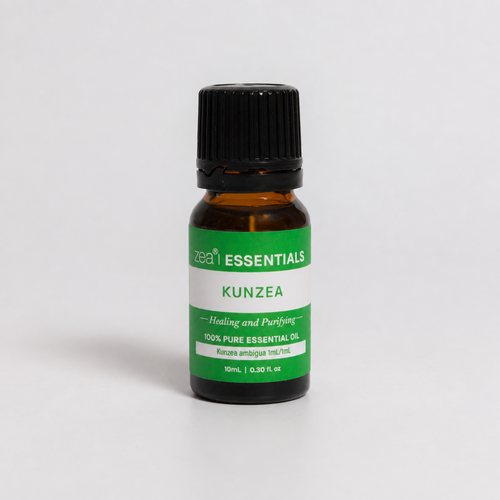
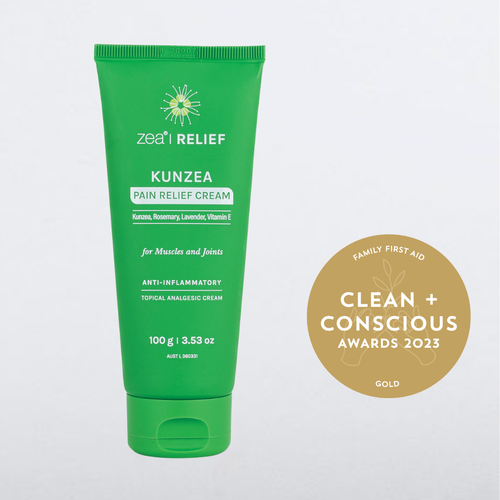
The honest, short answer: Kunzea oil is not a treatment for arthritis, and no product legally can be. But Kunzea Pain Relief Cream (KPRC) is registered with the Australian Register of Therapeutic Goods (ARTG) as a listed medicine, AUST L 360 331, and that listing specifically permits it to claim it may help decrease, reduce or relieve symptoms of mild arthritis and mild osteoarthritis, along with mild joint pain and mild rheumatic aches. That is a real, checkable regulatory fact, not a marketing line. This article sets out exactly what that listing does and does not mean, what the evidence base for Kunzea oil actually looks like, and how people use the cream day to day.
What osteoarthritis actually is, and how common it is
Arthritis is not one condition. Osteoarthritis, the most common form, happens when the cartilage cushioning a joint wears down over time, most often in the knees, hips, hands and spine. Rheumatoid arthritis is a different, autoimmune condition that inflames the joint lining itself. That distinction matters for this article, because the products discussed here are only ever relevant to mild osteoarthritis and mild joint discomfort, not to rheumatoid arthritis or any inflammatory joint disease.
Osteoarthritis is genuinely common. The Australian Institute of Health and Welfare estimates that roughly 1 in 5 Australians aged 45 and over lives with osteoarthritis, and the rate climbs with age1. Healthdirect, the Australian Government's health information service, describes typical symptoms as joint pain, stiffness, particularly first thing in the morning, and reduced range of movement, and notes that symptoms often ease with movement and worsen with rest2. That morning-stiffness pattern is exactly why so many people reach for a topical product before they have even left the bedroom.
What the ARTG listing for Kunzea Pain Relief Cream actually permits
Here is the part most content on this topic gets wrong. Kunzea Pain Relief Cream is registered with the ARTG as a listed medicine (AUST L 360 331). That precise wording matters, and it is different from the loose, inaccurate shorthand you will often see elsewhere describing this kind of product. A listed medicine's active ingredients and permitted indications are drawn from a pre-approved list based on traditional use or accepted low-level evidence. The Therapeutic Goods Administration (TGA) is the government body that administers the ARTG, but it does not individually clinical-trial-assess every listed product's efficacy the way it does for a registered prescription medicine3.
What that means in plain terms: the indications below are not Zea's marketing claims. They are the specific, narrow wording the ARTG record for AUST L 360 331 permits the product to use, and Zea's public summary is not allowed to go beyond them.
| Permitted indication (verbatim from the ARTG record) | What it means in practice |
|---|---|
| Decrease/reduce/relieve symptoms of mild arthritis/mild osteoarthritis | The core claim for this article's topic - mild cases only |
| Decrease/reduce/relieve mild joint pain/soreness | Everyday joint aches, not diagnosed disease |
| Decrease/reduce/relieve mild rheumatic aches and pains | General muscular/joint rheumatic-type discomfort |
| Analgesic/anodyne/relieve pain | General pain-relieving action |
| Anti-inflammatory/relieve inflammation | Supports the discomfort that often comes with joint irritation |
Two things the listing explicitly does not permit are just as important. The presentation restrictions on the record state the product must only ever refer to mild joint symptoms and mild rheumatic aches, and must not imply or refer to bone disease or disorders such as rheumatoid arthritis, juvenile arthritis, debilitating osteoarthritis or osteoporosis. So if you have been diagnosed with a more advanced or inflammatory joint condition, this product's listing was never designed to speak to that, and this article will not pretend otherwise.
The evidence picture, honestly
Kunzea oil is drawn from Kunzea ambigua, a native shrub grown in Tasmania in sustainable plantations as well as wild harvested. The main constituents relevant to topical comfort are Alpha-Pinene and 1,8-Cineole, both terpenes that occur widely across the Myrtaceae family (the same family as Tea Tree and Eucalyptus) and have been studied for general anti-inflammatory and analgesic activity in that broader plant group. Published research specifically on Kunzea oil is still an early-stage and comparatively young field next to decades-old research on oils like Tea Tree.
This is exactly why the product's claims sit on a listed-medicine pathway rather than a registered-medicine one. A listed medicine's permitted indications reflect what is allowed under a traditional-use or lower-evidence-tier framework, not the large randomised controlled trials required to establish a disease-level outcome. That is not a weakness we are trying to hide. It is the honest, checkable regulatory reality, and it is a meaningfully different (and more transparent) starting point than an unregulated overseas cream making the same claims with no listing at all.
If you are looking at Kunzea oil in its raw essential-oil form rather than the finished cream, it is worth being clear: the raw oil itself carries no ARTG listing and no permitted therapeutic indications. Only the finished, listed product, Kunzea Pain Relief Cream, can lawfully make the claims in the table above. You can read more about the oil's composition and where it comes from in our Kunzea oil composition guide, and how it compares chemically to a more researched relative in our Kunzea oil vs Tea Tree oil comparison.
How people actually use Kunzea cream for joint discomfort
Most people apply Kunzea Pain Relief Cream directly to the affected joint, most commonly knees, hands, hips or lower back, once or twice a day, working it in gently until absorbed. Consistency matters more than quantity: a thin layer applied regularly tends to be reported as more useful than an occasional heavy application. Many people build it into a broader daily routine rather than treating it as a stand-alone fix, alongside movement, warmth and rest as needed.
Healthdirect and Arthritis Australia both describe several recognised, non-drug self-management steps for mild osteoarthritis that sit comfortably alongside a topical product: regular low-impact movement such as walking or swimming, applying heat to ease morning stiffness, and maintaining a healthy weight to reduce load on weight-bearing joints24. We cover a full morning-to-night version of this in our natural arthritis pain routine guide, which walks through when to apply cream, when to move, and when to use heat or cold.

Some people prefer a larger, better-value format for daily use, in which case the Kunzea Pain Relief Cream Value Pack is worth a look, and others like to pair the cream with the raw Kunzea Tasmania Essential Oil for aromatherapy use alongside the cream (remembering the oil itself carries no therapeutic claim of its own). You can browse the full Pain Relief collection or the broader range of Zea Kunzea products to compare formats, and our ingredient glossary if you want to look up any of the other actives in the formulation.

Safety, medications and when to see your GP
Kunzea Pain Relief Cream is for external use only and should be kept out of reach of children. As with any topical product, patch-test on a small area first if you have sensitive skin, and stop use if irritation occurs. If you are taking prescription medication for arthritis or another joint condition, or you are pregnant, breastfeeding or managing another health condition, talk to your GP or pharmacist before adding any new topical product to your routine. They can tell you whether it is appropriate alongside what you are already taking.
The label itself is a useful guide here: if symptoms persist or worsen, the listing requires the product to advise you to talk to your health professional, and that is genuinely good advice regardless of what you are using. Mild joint discomfort that is getting worse, spreading to new joints, or accompanied by swelling, redness or fever is a reason to see a GP, not to reach for a stronger dose of anything sold over the counter.
Frequently asked questions
Is Kunzea oil good for arthritis?
Kunzea oil itself, in raw essential-oil form, carries no arthritis-specific therapeutic claim. The finished product Kunzea Pain Relief Cream, however, is registered with the ARTG as a listed medicine (AUST L 360 331) with permitted indications covering decreasing, reducing or relieving symptoms of mild arthritis and mild osteoarthritis. It is one recognised option among several for managing mild joint discomfort, not a cure or a substitute for medical care.
What does the ARTG listing allow Kunzea Pain Relief Cream to claim?
The full permitted set includes relieving mild arthritis and mild osteoarthritis symptoms, mild joint pain and soreness, mild rheumatic aches and pains, general pain relief (analgesic/anodyne action), and anti-inflammatory relief. It explicitly excludes any reference to moderate or severe arthritis, rheumatoid arthritis, or other bone disease.
How do people use Kunzea cream for joint discomfort day to day?
Most apply a thin layer to the affected joint once or twice daily, massaging it in until absorbed, and combine it with movement, heat and weight management as part of a broader daily routine rather than as a stand-alone fix. See our natural arthritis pain routine guide for a full daily structure.
How long does it take to feel a difference?
This varies from person to person, and we would rather be honest than promise a number that does not hold up. Use the product as directed and give it a consistent trial period. If you notice no change, or your symptoms persist or worsen, speak to your health professional rather than simply increasing the amount used.
Can I use Kunzea cream alongside my arthritis medication?
Topical products and oral or prescribed arthritis medications are generally used for different purposes and by different routes, but every person's situation is different. Check with your GP or pharmacist before combining any new topical product with medication you are currently taking, particularly if you have sensitive skin or other prescribed topical treatments in the same area.
What is the difference between Kunzea oil and Kunzea Pain Relief Cream?
Kunzea oil is the raw essential oil steam distilled from Kunzea ambigua leaves. It carries no therapeutic listing or permitted indication on its own. Kunzea Pain Relief Cream is a finished, formulated product containing Kunzea Ambigua leaf Oil alongside Lavender Oil, mixed tocopherols and Rosemary leaf extract, and it is this finished product that holds the ARTG listing (AUST L 360 331) and the permitted indications discussed in this article.
References
Sources open in a new tab so you do not lose your place.
- 1. Australian Institute of Health and Welfare. Osteoarthritis. View source
- 2. healthdirect Australia. Osteoarthritis. View source
- 3. Therapeutic Goods Administration. Listed medicines. View source
- 4. Arthritis Australia. Osteoarthritis. View source

![Kunzea Pain Relief Cream [Value Pack]](http://www.zeaaustralia.com/cdn/shop/files/Neutral_Images_Website_1080_x_1080_12_aeeb7fb5-6b18-4315-99ea-c7a97403e37a.png?v=1776732033&width=500)