An AUST L number means a medicine is registered with the Australian Register of Therapeutic Goods (ARTG) as a listed medicine - the lowest-risk of the three tiers Australia uses to regulate medicines. It confirms the product uses only ingredients drawn from a pre-approved safety list, and only wording for its claimed benefits drawn from a separate pre-approved list4. What it does not confirm is that the Therapeutic Goods Administration (TGA) individually tested the finished product before it reached a shelf and found that it works. That gap between "the ingredients and the wording are pre-approved" and "the finished product was individually proven effective" is the single most misunderstood fact in this category, and it is the reason this article exists: to set out, plainly and with the TGA's own published guidance, exactly what an AUST L number checks, what it does not check, and how to look one up for yourself.
What the ARTG actually is
Every medicine, medical device and biological legally supplied in Australia has to appear in the Australian Register of Therapeutic Goods (ARTG) - the TGA's public database of products cleared for legal supply, listing details like product name, formulation, and the sponsor (the company responsible for the product)1. Unless a product falls under a specific exemption, if it is not on the ARTG, it cannot legally be supplied in Australia2. Each entry gets a unique identifier that starts with "AUST", followed by a letter (or letters) showing which of the three tiers it sits in, and that identifier must be printed on the product's label.
The three tiers: AUST L, AUST L(A) and AUST R
Australia regulates medicines by risk, and the classification shows up directly in the number on the label. Lower-risk products are "listed", and higher-risk products are "registered"4. The table below sets out what actually differs between the three categories, using the TGA's own definitions.
| What it checks | AUST L (Listed) | AUST L(A) (Assessed listed) | AUST R (Registered) |
|---|---|---|---|
| Risk level | Lowest | Slightly higher than Listed | Highest |
| Ingredients allowed | Only low-risk ingredients from the Permissible Ingredients Determination | Same pre-approved low-risk ingredients as Listed | Can include higher-risk ingredients, e.g. those scheduled in the Poisons Standard |
| Wording (indications) allowed | Low-level wording only, from the Permissible Indications Determination | Higher-level "intermediate" wording | Can refer to treatment of serious conditions |
| TGA pre-market evaluation of the finished product | None - sponsor self-certifies safety, quality and efficacy compliance | Safety/quality self-certified; evidence for the specific indications IS assessed by the TGA before listing | Full TGA evaluation of safety, quality and efficacy before entry |
| Efficacy individually assessed pre-market? | No | Yes, for its specific indications | Yes |
| Typical products | Vitamins, herbal medicines, Traditional Chinese medicines, most complementary medicines, some sunscreens | A smaller group of complementary medicines making stronger claims | Prescription medicines, many over-the-counter medicines (e.g. paracetamol), some registered complementary medicines (e.g. high-dose iron supplements) |
| Number on the label | AUST L | AUST L(A) | AUST R |
Source: TGA, Understanding listed and registered complementary medicine regulation, and AUST numbers on medicine labels4,5.
The TGA's own labelling guidance draws the efficacy line explicitly: products carrying an AUST R or AUST L(A) number have had their efficacy assessed before they reach the market, and products carrying an AUST L number have not5. That single sentence is worth re-reading, because it is the plainest official statement of the exact distinction most people get wrong.

Where to find the number, and how to check it yourself
Every ARTG medicine must display its AUST number on the front of the label5 - look for "AUST L", "AUST L(A)" or "AUST R" followed by a string of digits, usually near the ingredients panel or the barcode. That number is also called the ARTG ID, and it is the key to the product's public record5.
The TGA runs a free, public ARTG search on its website. You can search using the product name, licence details, the sponsor's name, the active ingredient names, or the AUST number itself2. Each result opens onto a public summary showing details like the ARTG start date (when the product was first added) and the effective date of the most recent change to the entry2, along with any Consumer Medicine Information, Product Information or public summary documents on file1. It takes about the same effort as looking up a company on the ASIC register, and it is the single most useful five minutes anyone can spend before trusting a therapeutic claim.
What an AUST L listing does not mean
This is the part worth being completely honest about, because it is the whole reason the confusion exists. An AUST L listing is not a TGA endorsement that the specific finished product works. Listed medicines are not individually evaluated by the TGA for quality, safety or efficacy before they go to market3. Instead, the sponsor (the company that owns the product) certifies to the TGA that their specific product meets all applicable requirements for safety, quality and efficacy, and the product is then automatically added to the ARTG on the strength of that certification4.
What the TGA does assess, at a system level rather than a per-product level, is which ingredients are allowed to be used at all, and which wording is allowed to describe what a product does. Listed medicines can only use ingredients the TGA has already assessed as safe and low-risk, drawn from the Permissible Ingredients Determination3, and can only use claims drawn from the Permissible Indications Determination, the TGA's fixed list of pre-worded, evidence-backed indications3. So the safety net sits at the level of "which ingredients and which words are allowed to exist on any listed label anywhere", not at the level of "did the TGA test this specific bottle".
That does not mean the system is unpoliced. Falsely certifying that a listed medicine is safe, well-made and effective when it is not is an offence3, and the TGA can select any listed medicine for a compliance review at any time, requiring the sponsor to produce the evidence behind its claimed indications on request3. It is a self-certification model with real penalties and real spot-checks behind it, not an honour system with no consequences - but it is genuinely different from the full, individual pre-market evaluation that a registered (AUST R) medicine undergoes, and a listed medicine's own label is never allowed to claim otherwise.
Permitted indications: why the wording is always careful
An "indication" is simply the TGA's term for the statement describing what a medicine is claimed to do - "relieves coughs" is the TGA's own example of one6. Since 6 March 2018, every listed medicine added to the ARTG has only been allowed to use indications selected from the Permissible Indications Determination, a fixed list the TGA maintains and periodically updates6. The point of the list is transparency: it fixes exactly what is and is not a legitimate claim for a low-risk product, which protects the public from misleading wording and gives sponsors a clear compliance line to work within6.
Certain terms sit outside that list altogether. The TGA calls these "restricted and prohibited representations", and they include naming serious diseases, conditions or ailments - rheumatoid arthritis and depression are the TGA's own examples - because those conditions are considered too high-risk to be self-treated on the strength of a listed medicine's label alone3. That is exactly why compliant labels in this category talk about helping relieve mild symptoms rather than treating a named serious disease: it is not marketing caution, it is the actual legal boundary of what a listed medicine is allowed to say.

A worked example: Kunzea Pain Relief Cream
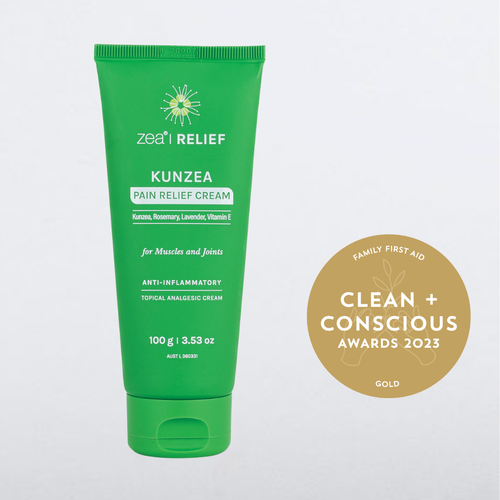
Kunzea Pain Relief Cream is a real, checkable case of everything above. Its public ARTG entry shows an ARTG ID of 360331, a start date of 8 April 2021, and Australian Kunzea Pty Ltd listed as the sponsor, with active ingredients including Kunzea Ambigua Leaf Oil, Lavender Oil, mixed tocopherols concentrate and Rosemary (Rosmarinus officinalis) Leaf Extract8. That means the product is registered with the ARTG as a listed medicine, AUST L 360 331, using only ingredients and wording drawn from those two TGA-maintained lists - its permitted wording for joint and muscle discomfort is covered in detail here. Like every AUST L product, the finished cream itself was not individually tested by the TGA for efficacy before it reached a shelf; what the listing certifies is that its ingredients and its claims both come from the TGA's pre-approved lists, and that the sponsor has certified compliance with the safety and quality requirements that apply to that category. That is a genuinely different (and more limited) claim than "the government tested this and confirmed it works" - and it is the honest, complete answer, not a softened one.
Frequently asked questions
What does AUST L mean?
It means the product is registered with the Australian Register of Therapeutic Goods (ARTG) as a listed medicine - the lowest-risk tier, using only pre-approved low-risk ingredients and pre-approved wording for its claims3.
What is the difference between AUST L and AUST R?
An AUST R (registered) medicine undergoes a full TGA evaluation of its safety, quality and efficacy before it can be supplied. An AUST L (listed) medicine does not - the sponsor self-certifies that their product meets those requirements, using only ingredients and wording from the TGA's own pre-set lists4.
Does an AUST L number mean the product's efficacy was assessed?
No. TGA guidance states this directly: products with an AUST R or AUST L(A) number are assessed for efficacy before they reach the market, and products with an AUST L number are not5. An AUST L number confirms the product is registered with the ARTG as a listed medicine using permitted ingredients and permitted indications - it does not confirm the finished product was individually tested and proven to work.
Where do I find a product's AUST L number?
On the front of the label, usually near the ingredients panel or barcode, printed as "AUST L" followed by a number5. You can then look that number up on the TGA's free public ARTG search by product name, sponsor or the number itself2.
Are essential oils listed on the ARTG?
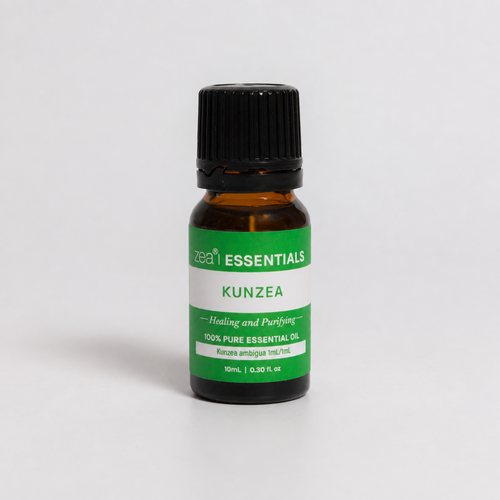
Only if they make a therapeutic claim. The TGA's own guidance uses essential oils as a direct example: the same oil can be sold as a cosmetic, a raw material, or an ingredient in a therapeutic good, and what determines which rules apply is the claim made about it, not the oil itself7. A product containing essential oils that makes a therapeutic claim must be entered on the ARTG and comply with therapeutic goods legislation; one sold with no therapeutic claim is regulated as a cosmetic and carries no AUST number at all7. That is why Kunzea Essential Oil and the rest of Zea's essential oils range carry no AUST L number, while the finished Kunzea Pain Relief Cream made with the same oil does. You can read more about how the raw oil itself is sourced and composed here, how it is grown and distilled in Tasmania here, and how a different kind of verification - laboratory purity testing rather than ARTG listing - works for essential oils generally here. For a closer look at how Kunzea's chemistry compares with a more studied relative, see our Kunzea oil vs Tea Tree oil comparison.
References
- Therapeutic Goods Administration (TGA), "About the Australian Register of Therapeutic Goods (ARTG)", last updated 28 November 2024.
- TGA, "Searching the Australian Register of Therapeutic Goods (ARTG)", last updated 22 June 2021.
- TGA, "An overview of listed medicines", last updated 15 November 2023.
- TGA, "Understanding listed and registered complementary medicine regulation", last updated 16 December 2025.
- TGA, "AUST numbers on medicine labels", last updated 10 November 2025.
- TGA, "Permitted indications for listed medicines", last updated 19 November 2024.
- TGA, "Determining if your product is a cosmetic or therapeutic good".
- TGA, Australian Register of Therapeutic Goods, public record 360331, "Kunzea Pain Relief Cream".