
By: Hayden Brass
Why arthritis pain management needs a whole-body routine
An estimated 4.11 million Australians are living with arthritis, roughly 15% of the population, and that figure is projected to reach 5.39 million by 2040.1 Arthritis Australia's 2025 reporting also flagged a rising diagnosis rate among working-age Australians under 55, which challenges the outdated assumption that arthritis is only an older person's condition.1
Managing arthritis pain with a single remedy only goes so far. Pain is shaped by several things at once: how you move, what you eat, how well you sleep, your stress levels, and how you care for your joints topically. No single approach addresses all of them.
A whole-body routine changes that. Rather than relying on one intervention, you layer complementary natural strategies across the day, from morning through to bedtime. This article walks through each part of the day with specific, practical steps grounded in Australian health guidance.
Morning: start the day with movement and topical relief
For people living with arthritis, mornings can be the toughest part of the day. Joint stiffness is typically at its worst after overnight rest, especially through the colder months in Victoria and Tasmania. Getting moving early, even gently, makes a real difference.
Regular low-impact exercise is a first-line strategy for managing arthritis, not an optional extra, and it is recommended specifically to reduce joint stiffness and maintain mobility.2 No intense workout is needed. A 10 to 15 minute morning routine of gentle stretching, tai chi-inspired movement, or a short walk is enough to warm your joints and ease into the day.
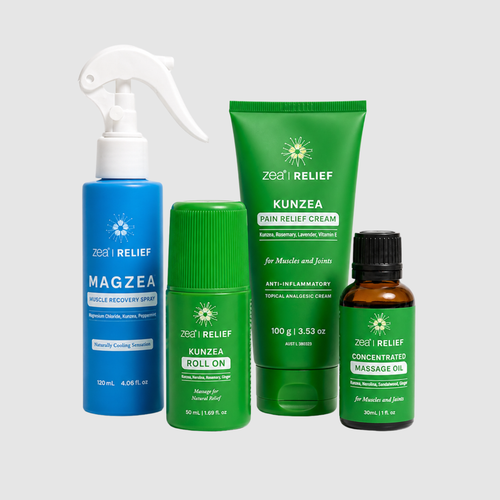
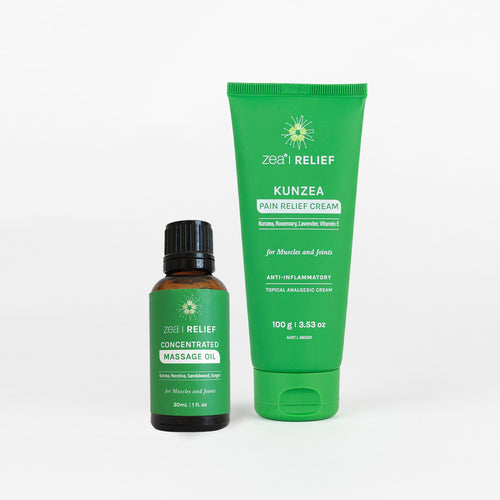
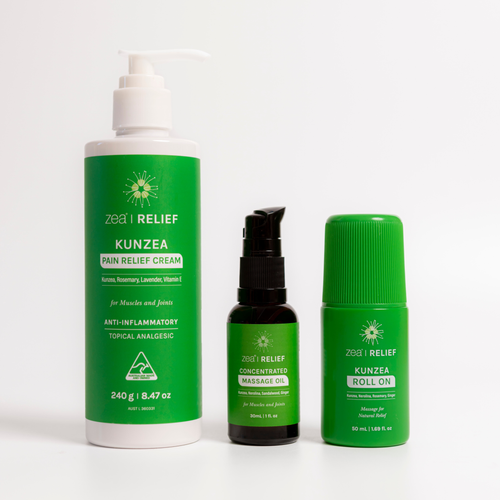
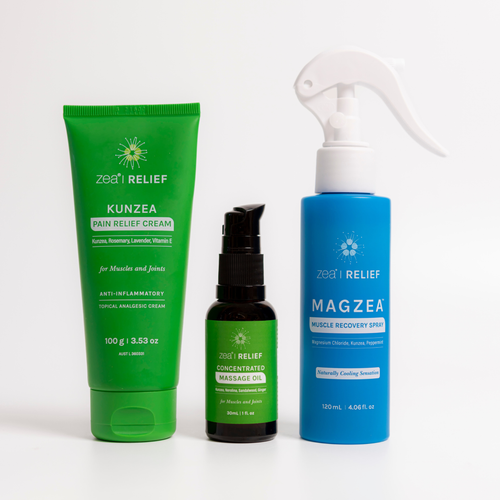
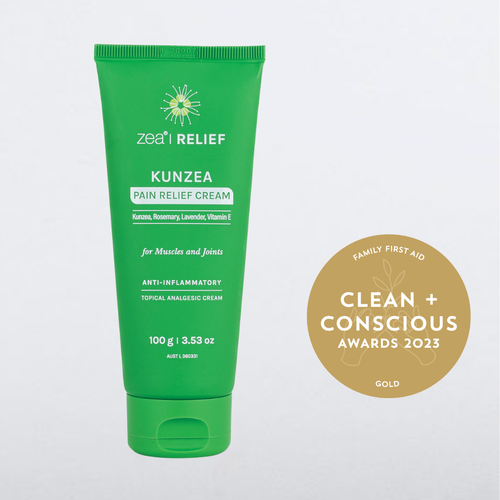
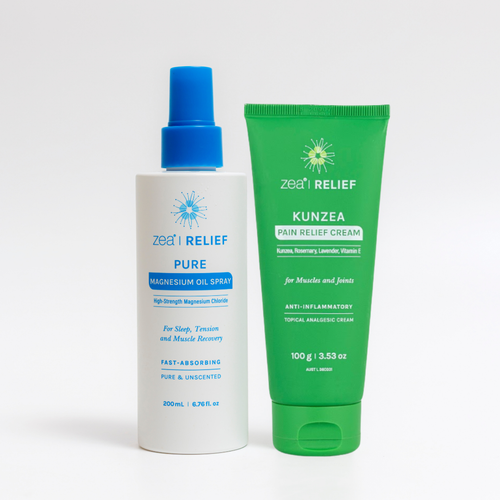
Pairing that movement with a topical can help further. Applying a topical to affected joints before activity supports mobility and helps address stiffness early. Zea's Kunzea Pain Relief Cream (AUST L 360 331) is listed on the Australian Register of Therapeutic Goods for the temporary relief of muscular aches and pains and mild arthritis symptoms,3 and is designed for exactly this kind of morning application. It comes in a 100g tube, a value pack, and a 240g size for households managing multiple pain points.

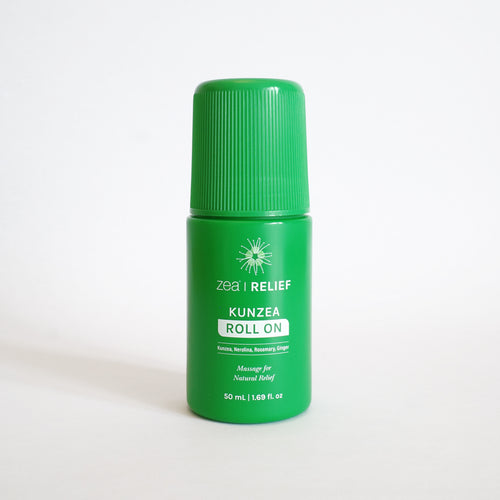
Kunzea ambigua is a shrub native to north-east Tasmania, used traditionally for pain relief and skin irritations. Its aromatic profile is led by monoterpenes such as Alpha-Pinene and 1,8-Cineole, with sesquiterpene alcohols behind them, a combination we break down in our full guide to Kunzea oil's composition.
Recognition of the ingredient extends beyond the Zea community. Chronic Pain Australia's National Pain Week 2026 programme included a session exploring how natural topical ingredients such as Kunzea oil may help relieve symptoms of mild arthritis, muscular aches and joint stiffness.4
Midday: anti-inflammatory eating and supplementation
What you eat at lunch is an active part of your arthritis routine. The foods you choose at midday influence how you feel through the afternoon and evening.
A Mediterranean-style pattern of eating, rich in omega-3 fatty acids, antioxidants and whole foods, is recommended as a complementary strategy for managing arthritis symptoms.5 A 2025 systematic review published in Frontiers in Medicine supports this: vegan, anti-inflammatory and Mediterranean dietary patterns were associated with improvements in disease activity, inflammation markers and quality of life in people with rheumatoid arthritis.6
Fish oil deserves a specific mention. The Arthritis Foundation reports that 600 to 1,000 mg daily may ease joint stiffness, tenderness, pain and swelling in people with rheumatoid arthritis.7
Magnesium is another mineral worth paying attention to. A February 2025 study in Frontiers in Immunology (n=3,250) found that people with osteoarthritis had a significantly higher magnesium depletion score, 1.47, compared with 1.01 in people without osteoarthritis.8 That is an association rather than proof of cause, but it is a reasonable prompt to check whether your diet is covering you: leafy greens, nuts, seeds, legumes and wholegrains are the everyday sources.
Other supplements people commonly use for joint comfort include Boswellia, devil's claw, vitamin D and ginger. Evidence quality varies considerably between them, so treat these as a conversation to have with your GP or pharmacist rather than a shopping list.
For practical midday meals, think salmon with leafy greens and an olive oil dressing, walnuts scattered over a salad, or turmeric-spiced legumes with brown rice. Simple, filling, and working for you rather than against you.
Afternoon: topical magnesium and warm hydrotherapy
Topical magnesium is a low-risk addition to an afternoon routine. Absorbed through the skin, it is applied directly over the joints and muscles that are bothering you rather than passing through the digestive system first, which is why many people find a magnesium spray easy to fit into the middle of the day. The clinical evidence for transdermal absorption is still limited, so treat it as a comfort ritual that many people find helpful rather than a proven anti-inflammatory.
Magnesium bath salts or a simple warm soak make an excellent afternoon or post-activity ritual. Warm water helps relax muscles and improve circulation around stiff joints, and warmth is one of the most consistently useful self-management tools for arthritis pain.9 Adding a few drops of Kunzea or eucalyptus essential oil to the bath adds an aromatherapy dimension to it.
For Australians in the southern states and Tasmania, cold winter afternoons can trigger flare-ups. Warm hydrotherapy is particularly relevant through those months, offering both physical relief and a genuine moment of comfort in the middle of the day.
Evening: sleep, stress management and flare-up care
Poor sleep amplifies pain perception, and chronic pain disrupts sleep. This cycle is one of the most frustrating parts of living with arthritis, and breaking it matters for long-term management. Chronic stress compounds the problem, which is why stress management belongs in any complete pain routine rather than being treated as a separate wellness project.
An evening wind-down ritual helps on both fronts. Dim the lighting, limit screens in the hour before bed, and try gentle breathing exercises or a short meditation. A consistent bedtime matters more than most people realise. Diffusing Kunzea or eucalyptus oil in the bedroom can support relaxation and connect the aromatherapy thread through to the end of the day.
If pain or stiffness is likely overnight, a second topical application to the major joints before bed supports cumulative relief. Consistent use is the key variable.
On flare-up evenings, when pain spikes unexpectedly, prioritise warmth (a heat pack or warm bath), gentle rest and topical relief, and go easy on alcohol that evening. These small choices during a flare can stop the next day being worse than it needs to be.
The stakes of managing arthritis proactively go beyond comfort. Arthritis Australia projects that 59,000 working-age Australians will be unable to work due to arthritis by 2030.10 A daily routine that keeps you functional and feeling better is worth the effort.
Building your routine: practical tips for Australian life
Consistency matters more than perfection. Adopting even two or three elements of this routine can produce meaningful relief over time. There is no need to do everything at once.
Before starting new supplements, particularly if you are on medication for rheumatoid arthritis, consult your GP or rheumatologist. This matters most with supplements such as fish oil and Boswellia, which may interact with certain medications.
TGA-listed products like Kunzea Pain Relief Cream (AUST L 360 331) give Australians an added layer of confidence when they want a regulated natural option.3 Zea's products are also NDIS-eligible, which makes this kind of routine accessible to Australians managing arthritis through the NDIS.
Try tracking your routine for a few weeks. Note which steps reduce your stiffness or pain most, and personalise from there. For further reading on condition management and support services, healthdirect9 and the Australian Institute of Health and Welfare11 are comprehensive, non-commercial starting points.
Start your natural arthritis routine today
A complete natural arthritis routine rests on five pillars: morning movement and topical relief, anti-inflammatory eating and sensible supplementation, afternoon warmth and topical magnesium, evening stress and sleep care, and consistent daily application of each.
Living with arthritis is genuinely hard. This routine is designed to work alongside your medical care, not replace it. As a Certified B Corporation and 1% for the Planet member, Zea is committed to making natural, Australian-made health products people can trust.
If you are ready to explore TGA-listed, Australian-made natural pain relief, our full pain relief range is a good place to start. Small, consistent steps grounded in nature and evidence can make a real difference to your daily quality of life.
References
Sources open in a new tab so you do not lose your place.
- 1. Arthritis Australia. Arthritis projections to 2040. View source
- 2. Better Health Channel, Victorian Department of Health. Arthritis and exercise. View source
- 3. Therapeutic Goods Administration. Australian Register of Therapeutic Goods entry 360331. View source
- 4. Chronic Pain Australia. National Pain Week 2026. View source
- 5. Better Health Channel, Victorian Department of Health. Arthritis and diet. View source
- 6. Nutrition and diet in rheumatoid arthritis: a systematic review. Frontiers in Medicine. 2025. View source
- 7. Arthritis Foundation. The ultimate arthritis diet. View source
- 8. Association between magnesium depletion score and osteoarthritis. Frontiers in Immunology. 2025. View source
- 9. healthdirect Australia. Arthritis. View source
- 10. Arthritis Australia. Fast facts. View source
- 11. Australian Institute of Health and Welfare. Arthritis. View source

![Kunzea Pain Relief Cream [Value Pack]](http://www.zeaaustralia.com/cdn/shop/files/Neutral_Images_Website_1080_x_1080_12_aeeb7fb5-6b18-4315-99ea-c7a97403e37a.png?v=1776732033&width=500)


